
Jalori Pass is not reliably open in winter. Snow on NH 305 typically blocks the pass for days or weeks between late December and March, and the first snow of this season has already fallen in November. Jibhi itself usually stays reachable from the Aut side, so plan a winter trip around the village and treat the pass as a bonus.
Quick facts
- Pass height: about 3,120 m (roughly 10,280 ft; some reports quote a higher figure)
- Road: NH 305, the Aut–Banjar–Jibhi–Jalori–Anni–Luhri highway
- Jibhi to Jalori Pass: approximately 12 km via Ghiyagi and Shoja, typically 45 minutes to an hour on a dry road
- Usual closure window: late December to March, with stray early spells from November
- Who gets through first after snow: 4x4 vehicles, then small cars, then buses
- Jibhi in winter: generally accessible from Aut and Banjar; cold, quiet and sometimes snow-dusted
Is Jalori Pass open in winter?
Sometimes, in clear spells — but you cannot count on it. There is no fixed closing date. The pass shuts when snow falls and reopens when the National Highways wing clears it, and that cycle can repeat several times in one season.
Recent winters show the pattern:
- November 2026: about an inch of fresh snow fell at the pass on the evening of 9 November. Local reports said NH 305 turned slippery and several tourist vehicles were stranded until police and residents helped move them.
- February 2025: bus services had only just resumed after 36 days of closure when a fresh spell on 5 February left roughly 25 cm of snow and shut the highway to all vehicles. The Tribune reported that the road was first restored for 4x4 vehicles only, with normal traffic expected a couple of days later.
The takeaway: even a light early snowfall can strand ordinary cars, and a mid-winter closure of a month or more is not unusual.
Why does the pass close so easily?
The road above Jibhi is steep, narrow and heavily shaded by forest, so snow turns to ice and stays. The Tribune has described the Ghiyagi–Khanag stretch across the pass as risky in winter because of the gradient and icing. That is the same section tourists drive for a day trip.
A tunnel under the pass, between the Ghiyagi side and Khanag, has been proposed to solve this. It is not something you can plan a trip around yet.
Can you visit Jibhi in December and January?
Yes, in most winters. Jibhi sits at roughly 1,600 m, far below the pass, and you reach it from Aut on the Kullu–Manali highway without crossing Jalori. Our Delhi to Jibhi travel guide and Manali to Jibhi route guide cover that approach in detail.
What to expect at the village:
- Cold, short days. Nights typically drop to around or below freezing; many stays rely on wood-fired heaters (tandoors) rather than central heating.
- Occasional snow, not guaranteed snow. Jibhi gets snowfall in some spells, usually in January and February, but it often melts within days. Our guide to when it snows in Himachal explains the timing.
- Fewer open stays and cafes. Some properties close or run limited kitchens in deep winter. Confirm heating, hot water and meals before you book.
- Icy patches after snowfall. The Banjar–Jibhi road is narrow; a heavy spell can slow it for a day even when the valley is technically open.
For things to do at valley level — the waterfall, Chehni Kothi, village walks — see the Jibhi and Jalori destination page.
How far up can you go when the pass is shut?
It depends on the snowline that week. Typically:
- Jibhi to Ghiyagi (about 3 km): usually drivable.
- Ghiyagi to Shoja (about 7 km from Jibhi): often open in light snow, but the first place ordinary cars start to struggle.
- Shoja to Jalori top (about 5 km): the section that ices up and closes. After snow, expect it to be 4x4-only or shut.
Many winter visitors drive as far as conditions allow, then walk the road for snow. That is a reasonable plan if you turn around early and do not push a two-wheel-drive car onto ice.
The treks from the top — Serolsar Lake (about 5 km one way) and Raghupur Fort (about 3 km one way) — become snow walks in winter. Do them only in settled weather, with proper footwear and ideally a local guide, and skip them if the pass road itself is closed.
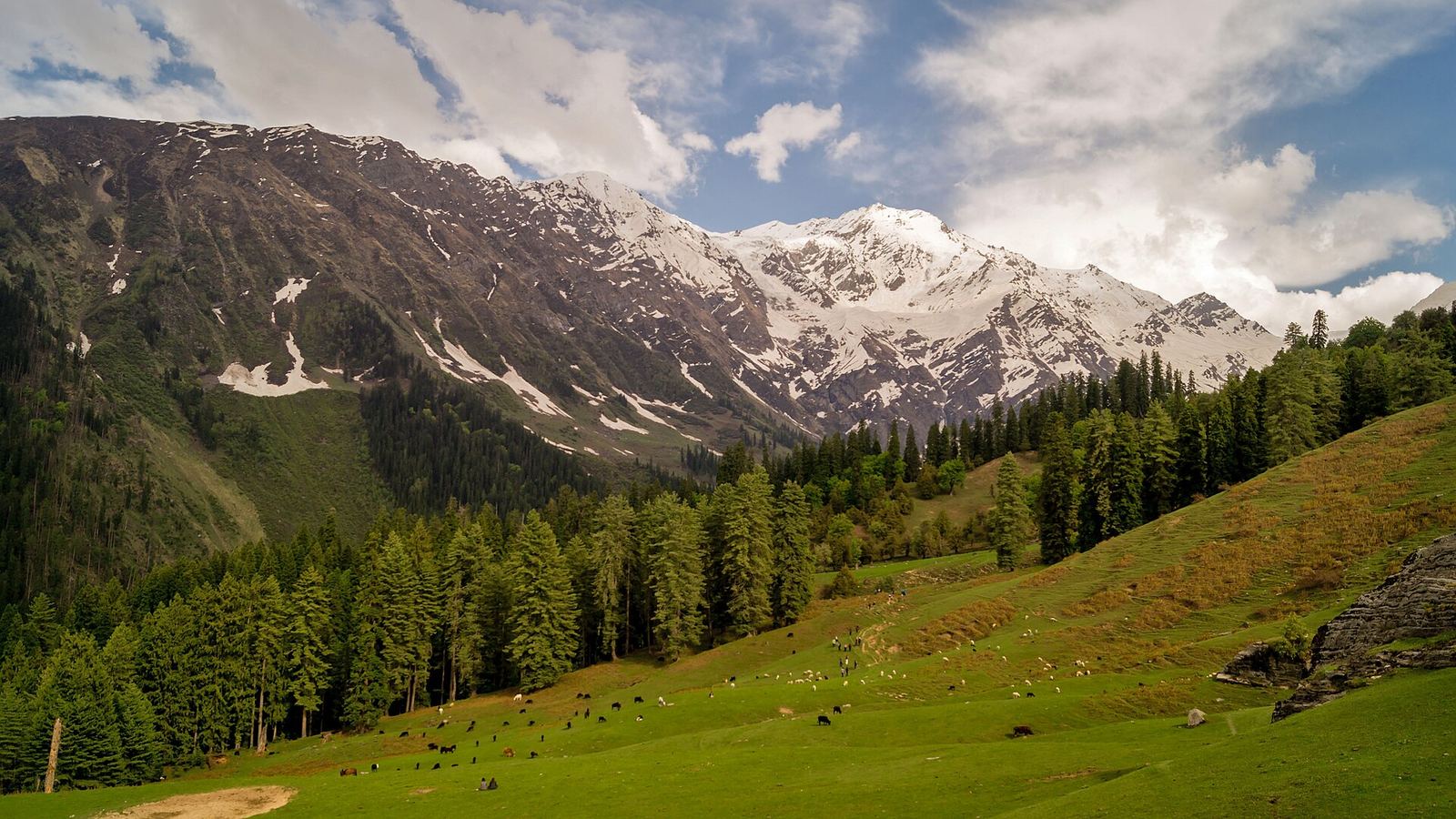 Photo: Wikipedia/Wikimedia contributors · source
What if you are coming from Shimla or Narkanda?
This is where a closed pass really matters. The scenic Shimla–Narkanda–Luhri–Anni–Jalori–Jibhi drive is a summer and autumn route. When the pass is shut, traffic between the Anni side and Kullu has to go around: The Tribune puts Luhri to Kullu at about 120 km over the pass and about 220 km via Karsog.
In winter, travellers from Shimla should plan to reach Jibhi the long way, through Mandi and Aut, and not gamble on the pass. If your trip includes Narkanda and Hatu Peak, treat it as a separate leg.
 Photo: Satyamrai7777 · CC BY-SA 4.0 · source
How should you plan a winter trip?
- Check the road the evening before and again in the morning. Ask your host in Jibhi or Shoja, and use the Kullu district administration emergency operation centre for official status. Social media clips are often a day old.
- Hire a local driver for the pass day. Banjar valley drivers know where ice forms. A full-day rental with one driver suits this better than a one-way drop, because the turnaround point is decided on the road.
- Ask about 4x4 and snow chains if snow has fallen in the last week.
- Start late morning, return by mid-afternoon. Give ice time to soften, and be off the upper road before it refreezes.
- Keep a buffer day. If you have a fixed bus or flight from Aut, Bhuntar or Chandigarh, do not schedule the pass on your last day.
- Carry warm layers, water, snacks and a charged phone. Network is patchy above Shoja.
Frequently asked questions
Is Jalori Pass closed in December?
Not always. Early December is often still drivable in clear weather. Closures become more likely from late December, and one snowfall can shut the pass for days or weeks.
When does Jalori Pass usually reopen?
There is no fixed date. In recent years buses have resumed anywhere between February and late March, with small vehicles and 4x4s allowed earlier. Fresh snow can close it again.
Does it snow in Jibhi?
Sometimes, mostly in January and February, and it rarely lasts long at village level. Shoja and the pass above hold snow far more reliably.
Can a normal car reach Jalori Pass in winter?
On a dry, cleared day, yes. After snowfall, ordinary cars are the first to get stuck on the Shoja–Jalori climb. Use a local 4x4 or stop lower down.
Is Jibhi worth visiting if the pass is closed?
Yes, if you want a quiet, cold-weather stay with forest walks and a wood fire. If guaranteed snow play is the goal, a higher destination is a safer choice.
The bottom line
Book Jibhi for the village, not the pass. Go in a clear spell, confirm heating with your stay, keep one flexible day for Shoja or Jalori, and take a local driver if there is snow on the road. If the pass is shut, enjoy the valley and the nearby Tirthan Valley instead of forcing the climb. Himsafar is currently in waitlist mode; bookings are not live yet.
Why this matters
This guide is part of the demand map we are building for Himachal. If the route, activity or idea matters to you, joining the waitlist tells us to prioritize it.
What to do next
Open the related destination or service, preview the travel flow, and support the specific corridor instead of signing up generically.
Reader signal
Reading about Jalori Pass helps us understand content demand. Waitlist joins help us understand launch demand.
Want this to become a real Himsafar route?
We are using the website to learn what people actually want us to build. Join the waitlist to show support for this kind of Himachal travel and get first access when matching routes open.
Himsafar Editorial
Destination guides