Chandigarh to Shimla is roughly 112–117 km by road on NH-5 via Panchkula, Kalka, Dharampur, Solan and Shoghi, and typically takes 3.5 to 4.5 hours in fair weather. HRTC ordinary buses start near ₹270, while a Himsuta or Volvo AC seat is around ₹470–500. A private taxi usually costs ₹2,500–4,500 one way. In monsoon, add one to two hours.
That last line is the one doing the real work in August. The distance has not changed; the reliability of the climb has.
Quick facts for the Chandigarh–Shimla journey
- Road distance: approximately 112–117 km on NH-5, the old Hindustan–Tibet Road
- Typical fair-weather driving time: 3.5–4.5 hours including one halt
- Route: Chandigarh → Panchkula → Kalka → Parwanoo → Dharampur → Solan → Kandaghat → Shoghi → Shimla
- Terrain split: the first ~35 km to Kalka is fast four-lane plains driving; the remaining ~65–70 km is sustained mountain climbing
- HRTC fares: approximately ₹270 for ordinary and semi-deluxe classes, rising to roughly ₹470–500 for Himsuta and Volvo AC services
- Private taxi: approximately ₹2,500–3,500 for a sedan and ₹3,500–4,500 for an SUV, one way, with tolls and parking usually extra
- Main Chandigarh boarding point: ISBT Sector 43, about 13 km and 25–35 minutes from Chandigarh airport
- Best months for this drive: March–June and late September–December
Which route does the Chandigarh to Shimla drive actually take?
There is effectively only one sensible route, and that simplifies planning considerably compared with most Himachal corridors.
You leave Chandigarh through Panchkula, run the four-lane stretch to Kalka in roughly 45 minutes, and then begin climbing. Parwanoo marks the state boundary and the start of proper hill driving. Dharampur is the turn-off for Kasauli. Solan sits roughly halfway and is the natural lunch or chai stop. After Kandaghat and Shoghi, the road tops out at Shimla.
The Kalka–Solan section has been widened substantially in recent years, which is why journey times have improved. It is also the section most exposed to slope failures in heavy rain, because cut slopes above a widened carriageway take time to stabilise.
There is no meaningful alternative alignment. If NH-5 is blocked, you wait for clearance rather than reroute — unlike the Kangra or Kullu corridors, where diversions usually exist.
How long does Chandigarh to Shimla take in monsoon?
Longer than the map suggests. The honest planning number for August is 5 to 6 hours, and you should be willing to lose more than that on a bad day.
Two things drive the delay. First, single-lane traffic control at landslide clearance points, which can hold a queue anywhere from twenty minutes to several hours. Second, the saturation of the hillsides after weeks of rain.
The scale is measurable. In the State Emergency Operation Centre position reported on 5 August 2026, 112 roads remained blocked across Himachal Pradesh, with 189 transformers and 61 water supply schemes disrupted. Only four of those blocked roads were in Shimla district, and none on this corridor that evening — but Solan district accounted for 90 of the disrupted transformers, a fair proxy for how much weather the Kalka–Solan belt had absorbed. The same report noted yellow alerts for heavy rain continuing statewide until 11 August.
So leave Chandigarh by 07:00–08:00 if you can. A midday departure in August often means the final climb happens in fading light and moving cloud. Check the IMD Shimla regional centre page the night before you travel — it is free, official, and more useful than any travel forum.
Bus, taxi or shared seat — what should you actually book?
HRTC bus. The state corporation runs frequent departures from ISBT Sector 43 through the day, in ordinary, Himmani Deluxe, Himdhara AC and Himsuta Volvo classes. Ordinary fares sit near ₹270 and the Volvo services around ₹470–500, with a scheduled run of roughly 3 hours 45 minutes. Book through the official HRTC reservation portal rather than a reseller. Volvo departures on Friday and Saturday, and the days around Independence Day, fill early.
Choose the bus if you are travelling light, alone or as a couple, and your Shimla stay is near the Old Bus Stand or Lift area.
Private taxi. Roughly ₹2,500–4,500 one way depending on vehicle class. Worth it when you have luggage, elderly parents or young children, when you are landing at Chandigarh airport and want a single seamless leg, or when your stay is in Sanjauli, Chhota Shimla, Mashobra or Kufri rather than the centre. It also lets you stop at Kasauli or Solan without renegotiating anything.
Shared seat. The middle path: bus-adjacent pricing with cab comfort and door-area drops. This is the pattern HimSafar is building around — the reasoning is set out under shared seats on Himachal routes.
One Shimla-specific point catches first-timers: Mall Road and the Ridge are largely vehicle-free. Whatever you book, your drop point will be a parking area or road head, followed by a walk, a lift ride or a porter. Confirm the actual drop location with your hotel before assuming a taxi has solved your luggage problem.
Is the Kalka–Shimla toy train a realistic option in August?
It is a wonderful journey and an unreliable August plan.
The UNESCO-listed narrow-gauge line is disrupted almost every monsoon. On 27 July 2026, the Railways suspended four toy train services for ten days, until 5 August, citing frequent landslides on the track alongside low occupancy — trains 52451 and 52459 uphill, 52452 and 52460 downhill. Earlier in the season, a landslide on the Kathlighat–Kano section stranded the Shivalik Deluxe Express and its passengers had to be moved onward by road.
That suspension window has now passed, but the underlying pattern has not. Treat the train as a monsoon bonus, not a monsoon plan: check live status on the day and keep a road option in reserve. If the railway is the point of the trip, come between October and June. Our guide to choosing between the Kalka–Shimla train and a cab covers that decision in more detail.
Where should you break the journey?
Two stops genuinely improve the drive rather than lengthening it.
Kasauli, about 12 km up from Dharampur, is a quiet colonial-era cantonment town with pine walks and long plains views. It works as a half-day pause or a one-night stop that splits the journey — see our Kasauli weekend transfer guide for how the approach roads and parking actually behave.
Solan is the practical halfway halt: fuel, food and clean washrooms, roughly two hours from Chandigarh.
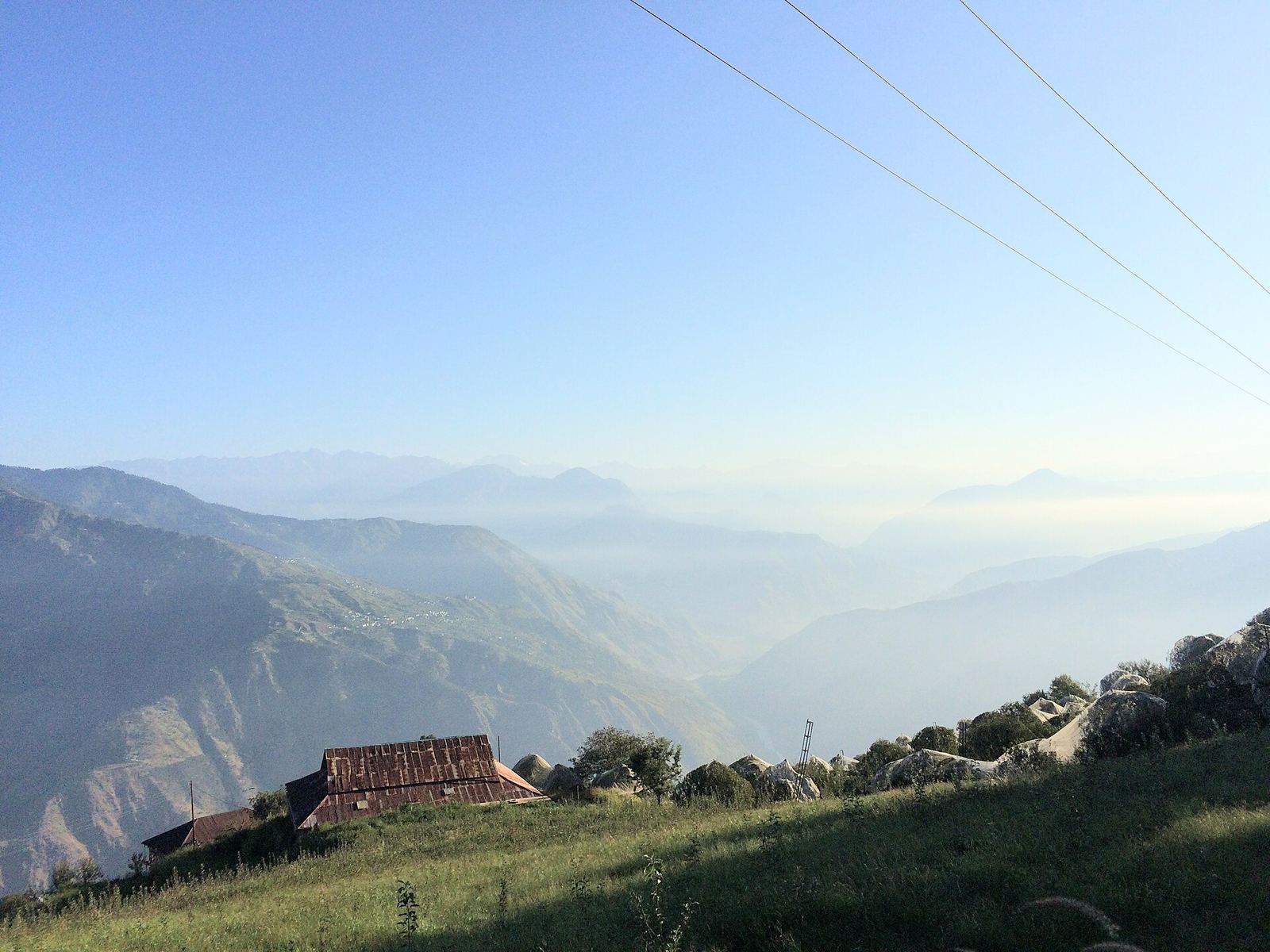
If you have a spare day at the top, Shimla connects easily onward to Kufri and Narkanda — an hour or two of driving that takes you into apple country and away from Mall Road crowds.
Frequently asked questions
How many hours is Chandigarh to Shimla by car? Typically 3.5 to 4.5 hours in fair weather for 112–117 km. In monsoon or peak-season weekend traffic, plan for 5 to 6 hours.
What is the cheapest way to get from Chandigarh to Shimla? An HRTC ordinary bus from ISBT Sector 43, at roughly ₹270. A Himsuta or Volvo AC seat costs around ₹470–500 and is considerably more comfortable on a four-hour climb.
Is the road from Chandigarh to Shimla safe in monsoon? The national highway generally stays open, but landslides cause intermittent closures and single-lane traffic control, particularly on the Kalka–Solan section. Travel in daylight, check the weather warning the night before, and read our wider notes on travelling in Himachal during monsoon.
Can I go directly from Chandigarh airport to Shimla? Yes. A pre-arranged taxi from the airport terminal is the simplest option. If you prefer the bus, allow 25–35 minutes and about 13 km to reach ISBT Sector 43 first, plus buffer for the boarding queue.
When is the best time to do this drive? March to June and late September to December. October and November offer the clearest Himalayan views and the most dependable road conditions.
The practical recommendation
For most travellers in August: book a morning departure, take the road rather than the rail, and add two hours of buffer to whatever time you are quoted. Travelling light and staying centrally, the HRTC Volvo is excellent value. Arriving by air, carrying luggage or travelling with family, a taxi or shared seat removes three separate transfer problems for a modest premium.
Whatever the forecast says, check it again the morning you leave. On this corridor, the weather decides the schedule.
Why this matters
This guide is part of the demand map we are building for Himachal. If the route, activity or idea matters to you, joining the waitlist tells us to prioritize it.
What to do next
Open the related destination or service, preview the travel flow, and support the specific corridor instead of signing up generically.
Reader signal
Reading about Routes helps us understand content demand. Waitlist joins help us understand launch demand.
Want this to become a real Himsafar route?
We are using the website to learn what people actually want us to build. Join the waitlist to show support for this kind of Himachal travel and get first access when matching routes open.
HimSafar Editorial
Destination guides