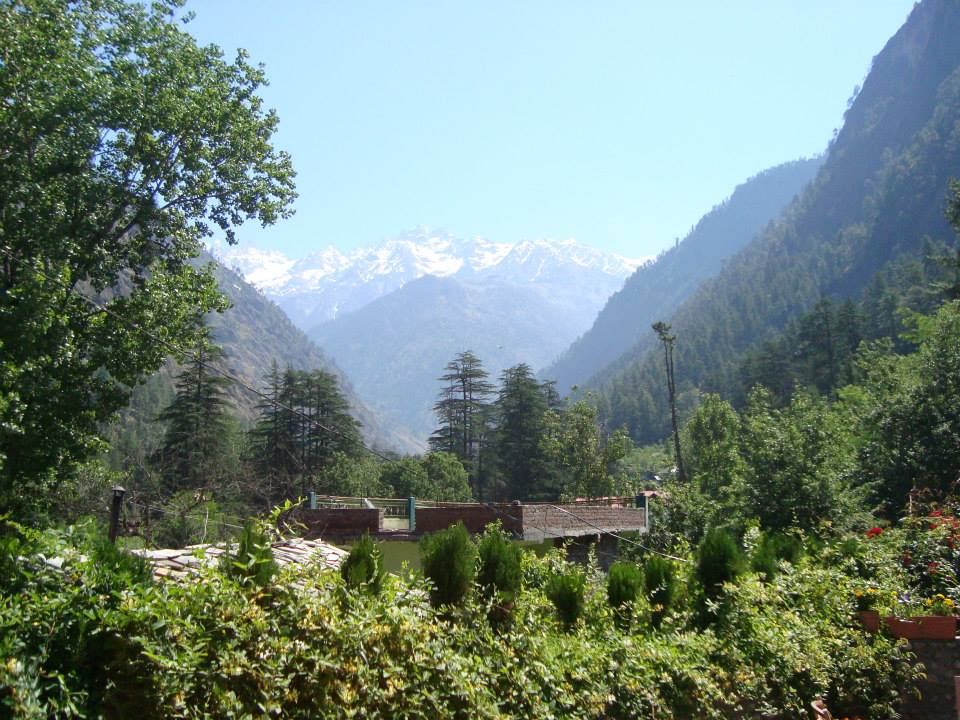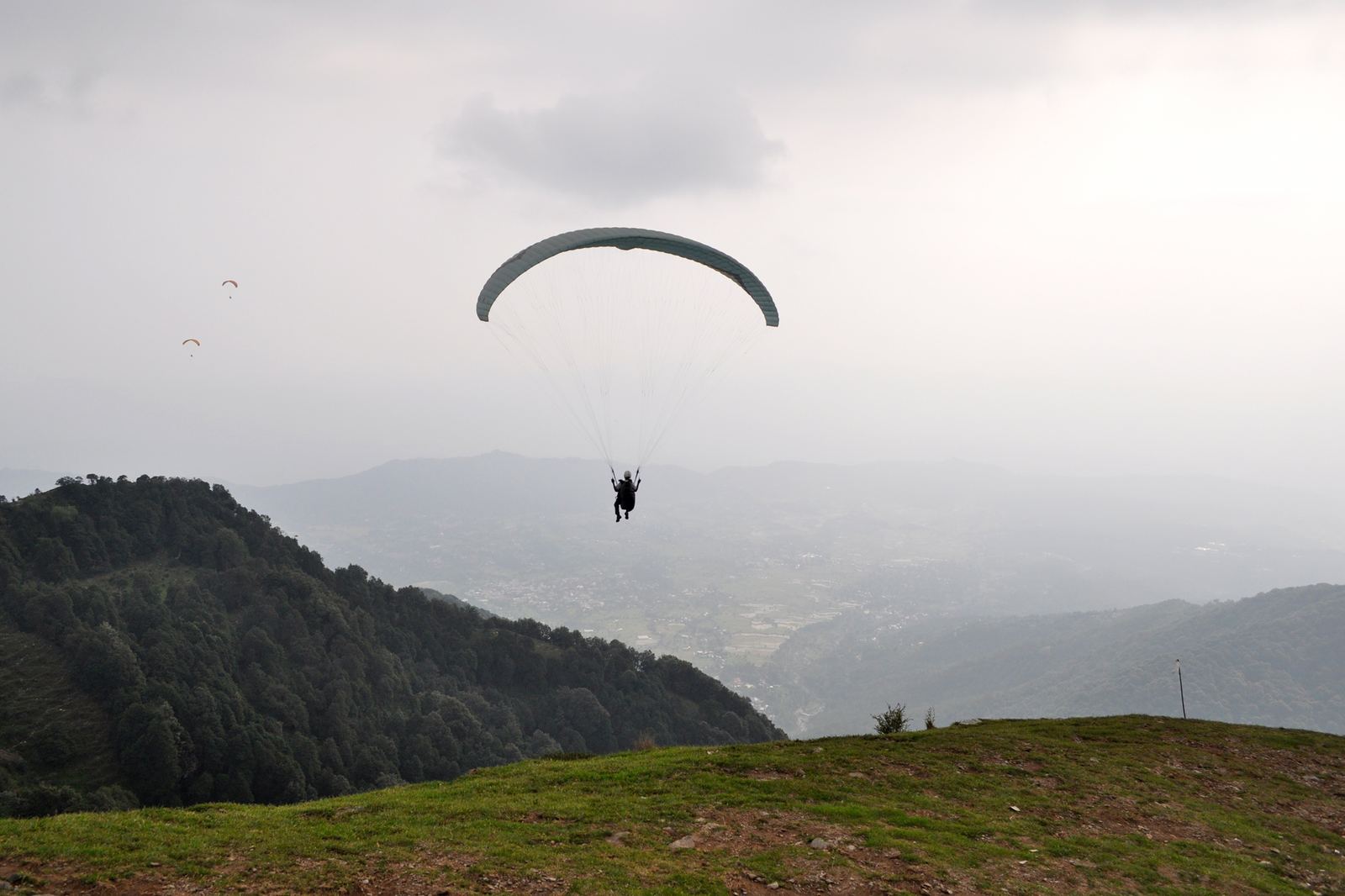
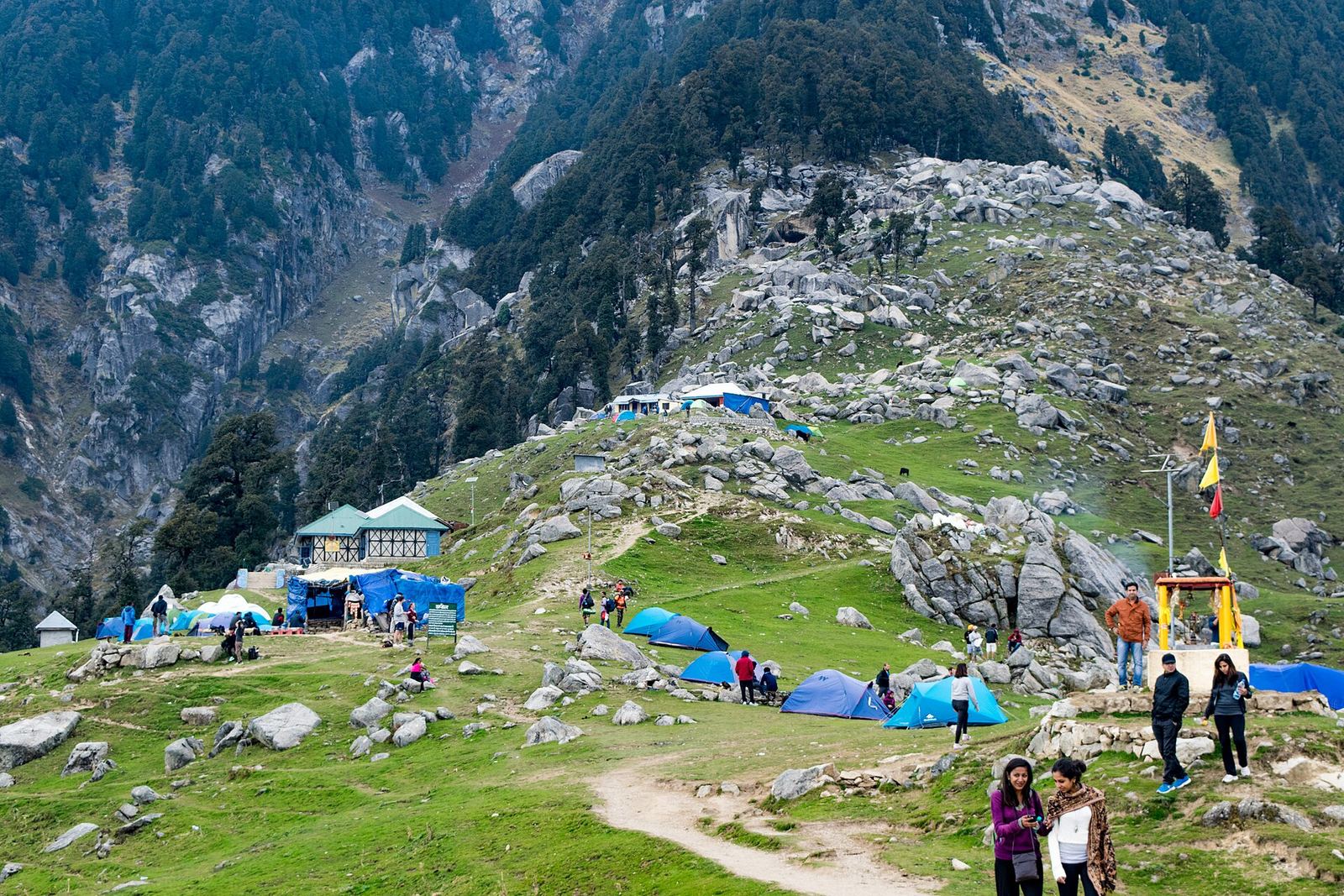
The Triund trek from McLeod Ganj is a moderate day hike of roughly 9 km one way that climbs to a grassy ridge at about 2,850 m facing the Dhauladhar wall. Most people start from Gallu Devi Temple, walk 6–7 km in around 4–5 hours, and either return the same day or camp overnight with a forest permit. It is doable for reasonably fit first-time trekkers.
Quick facts
- Distance: approximately 9 km one way from McLeod Ganj; about 6–7 km from Gallu Devi Temple.
- Trek time: roughly 4–5 hours up, 3 hours down.
- Top altitude: approximately 2,850 m; elevation gain of about 1,000 m from Gallu Devi.
- Difficulty: moderate — gradual forest climb with steep switchbacks near the top.
- Best season: March–June and September–November. Winter brings snow; the monsoon (July–August) is slippery and risky.
- Fees: a forest trekking fee of approximately ₹100 per person per day typically applies; overnight camping is regulated and charged separately. Check current rates before travelling.
Where does the Triund trek start?
The classic base is McLeod Ganj, the Tibetan hill town above Dharamshala. From the main square, most trekkers take a short taxi ride (about 10 minutes) or walk up to Gallu Devi Temple at roughly 1,860 m, which is the usual trailhead. Starting from Gallu Devi shortens the walk to about 6–7 km each way.
An alternative route runs via Bhagsu Nag waterfall and Dharamkot before joining the main trail. It is longer and adds a couple of hours, so it suits those who want a fuller day rather than the quickest way up.
If you are arriving from outside Kangra, plan the transfer to the base town first. Our guide to the Dharamshala to McLeod Ganj weekend route covers the short final hop, and the destination page for Triund sets out the ridge itself.
What is the trail like?
From Gallu Devi the path climbs steadily through oak and rhododendron forest, passing a Forest Guest House at around 2,200 m and a couple of small tea stalls — the well-known "Magic View" and "Snowline" cafés — where you can rest and refill water. The final stretch is a series of tight switchbacks, often called the "22 curves," which is the steepest and most tiring part of the climb.
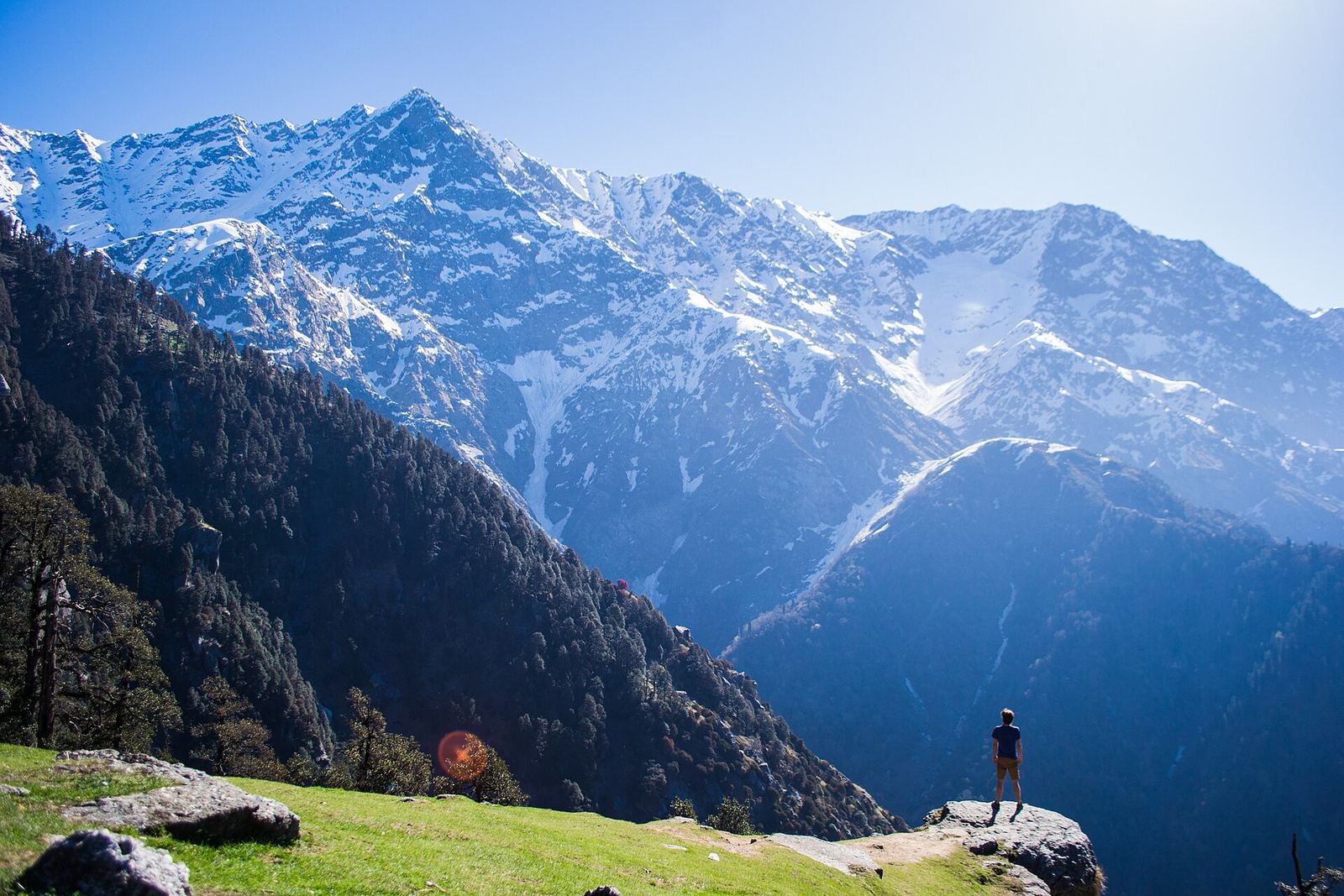
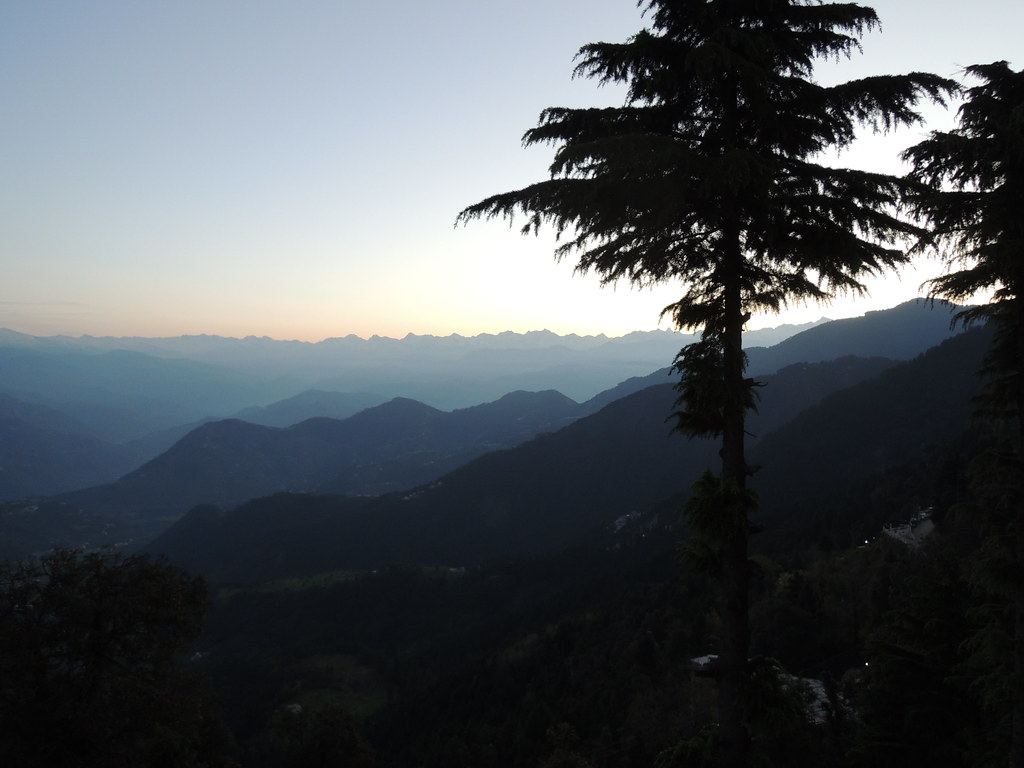
The reward at the top is a broad open meadow with the full Dhauladhar range rising directly ahead and the Kangra Valley falling away behind. On a clear evening the sunset and the night sky are the reasons many people choose to stay overnight rather than rush back down.
How hard is the Triund trek?
It is rated moderate. There is no technical climbing and no special equipment is needed beyond good trekking shoes, but the continuous ascent and the 22 curves near the top will test anyone who does not walk regularly. Reasonably fit adults and older children manage it comfortably at a relaxed pace with breaks.
To make the day easier: start early, carry at least 1.5–2 litres of water per person, pack layers because the ridge is much colder and windier than the town, and keep some daylight buffer for the descent. If you would rather join a fixed, supported outing, HimSafar lists the Triund day trek and an overnight Triund ridge stargazing experience among its curated activities.
Do you need a permit, and can you camp?
A forest trekking fee typically applies — around ₹100 per person per day in recent reporting — collected by the Himachal Pradesh Forest Department at the entry point. Overnight camping at the top has been tightly regulated for several years on environmental grounds, with limits on the number of tents and a separate camping charge. Rules and quotas change, so confirm the current position with a local operator or the forest office before you plan to sleep at the summit, rather than assuming a tent will be allowed on arrival.
For most travellers a day hike avoids this uncertainty entirely. If you do want the overnight experience, book through a recognised operator who arranges the permit rather than carrying a tent up on spec.
When is the best time to trek Triund?
The most reliable windows are March to June and September to November, when the trail is dry, views are clear and daytime temperatures are pleasant. December to February can bring heavy snow, which makes the upper section genuinely difficult and sometimes impassable without proper winter gear.
The monsoon months of July and August, including right now, need real caution. The India Meteorological Department has warned of heavy to very heavy rainfall over Himachal Pradesh with the risk of flash floods and landslides in districts including Kangra, and forest trails become muddy, slippery and leech-prone with poor visibility. If you are travelling in this window, read our note on travelling through Himachal in the monsoon, review the general safety guidance, and be willing to postpone the climb if it is raining hard. A view you cannot see is not worth a fall on a wet switchback.
Frequently asked questions
How long does the Triund trek take? About 4–5 hours to walk up from Gallu Devi Temple and roughly 3 hours to come back down, so a comfortable day hike is 8–9 hours including breaks and time at the top.
Is the Triund trek suitable for beginners? Yes. It is one of the most popular first Himalayan treks and needs no technical skill, but it is still a steady 1,000 m climb, so reasonable fitness and good shoes matter.
Is camping allowed at Triund? Overnight camping is regulated by the Forest Department with tent limits and a separate fee, and the rules have changed repeatedly. Confirm the current position with a local operator or forest office before planning to stay overnight.
Can you do the Triund trek in the monsoon? It is possible but not advisable during heavy rain. July and August bring slippery trails, leeches, low visibility and a raised landslide risk across Kangra, so check the forecast and be ready to postpone.
How do I reach the Triund trailhead from Dharamshala? Travel up to McLeod Ganj first, then take a short taxi or walk to Gallu Devi Temple, the usual starting point about 10 minutes from the McLeod Ganj square.
The practical recommendation
For a first trip, treat Triund as a well-planned day hike in the March–June or September–November window: start early from Gallu Devi, carry water and layers, pay the forest fee, and be back before dark. Save the overnight camp for a dry, settled spell when permits are confirmed. If you are here in the current monsoon stretch, keep the plan flexible and let the weather decide the day.
When HimSafar's booking opens — it is currently in waitlist mode — arranging the transfer up to McLeod Ganj and a supported trek in one place will make the logistics simpler. For now, use the destination and activity pages above to plan, and check live conditions before you set out.
Sources: IMD heavy-rain and landslide warning for Himachal Pradesh, July 2026 (ANI); Himachal Forest Department Triund trekking fee (The Tribune); Triund overnight camping regulation (The Tribune).
Why this matters
This guide is part of the demand map we are building for Himachal. If the route, activity or idea matters to you, joining the waitlist tells us to prioritize it.
What to do next
Open the related destination or service, preview the travel flow, and support the specific corridor instead of signing up generically.
Reader signal
Reading about Trekking helps us understand content demand. Waitlist joins help us understand launch demand.
Want this to become a real Himsafar route?
We are using the website to learn what people actually want us to build. Join the waitlist to show support for this kind of Himachal travel and get first access when matching routes open.
HimSafar Editorial
Destination guides