Shimla to Manali is roughly 250 km by road and typically takes 7–9 hours via Bilaspur, Sundernagar, Mandi, Aut and Kullu. HRTC buses run from about ₹560 for an ordinary seat to around ₹850 for a Volvo, while a one-way private taxi usually costs ₹3,500–7,500. In monsoon, add two to three hours of buffer.
That last sentence is doing most of the work in August. The distance has not changed, but the reliability of the drive has.
Quick facts for the Shimla–Manali drive
- Main route: Shimla → Bilaspur → Sundernagar → Mandi → Aut → Kullu → Manali, approximately 250 km
- Typical fair-weather time: 7–9 hours including halts; some operators quote 6 hours, which is optimistic outside the early morning
- Scenic alternative: Shimla → Narkanda → Luhri → Ani → Jalori Pass → Banjar → Aut → Manali, roughly 290–300 km and 9–11 hours
- HRTC fares: approximately ₹560–650 for ordinary and semi-deluxe classes, and around ₹850 for a Volvo multi-axle service
- Private taxi: approximately ₹3,500–5,500 for a sedan and ₹5,500–7,500 for an SUV, one way, with tolls and parking usually extra
- Best months for this drive: March–June and late September–November
- Monsoon status, early August 2026: national highways open, but a large number of rural link roads across Mandi and Kullu districts were closed
Which route should you take from Shimla to Manali?
There are effectively two, and they are not interchangeable.
The Mandi–Kullu highway is the default. You drop from Shimla towards Bilaspur, join the Chandigarh–Manali highway corridor near Sundernagar, and run north through Mandi, the Pandoh section, the Aut tunnel and Kullu into the Manali valley. It is the fastest, the best surfaced, the one every bus uses, and the one most likely to have working diversions when something slips. It is also the one most exposed to landslides between Mandi and Aut, which is where the Beas gorge squeezes the road against unstable slopes.
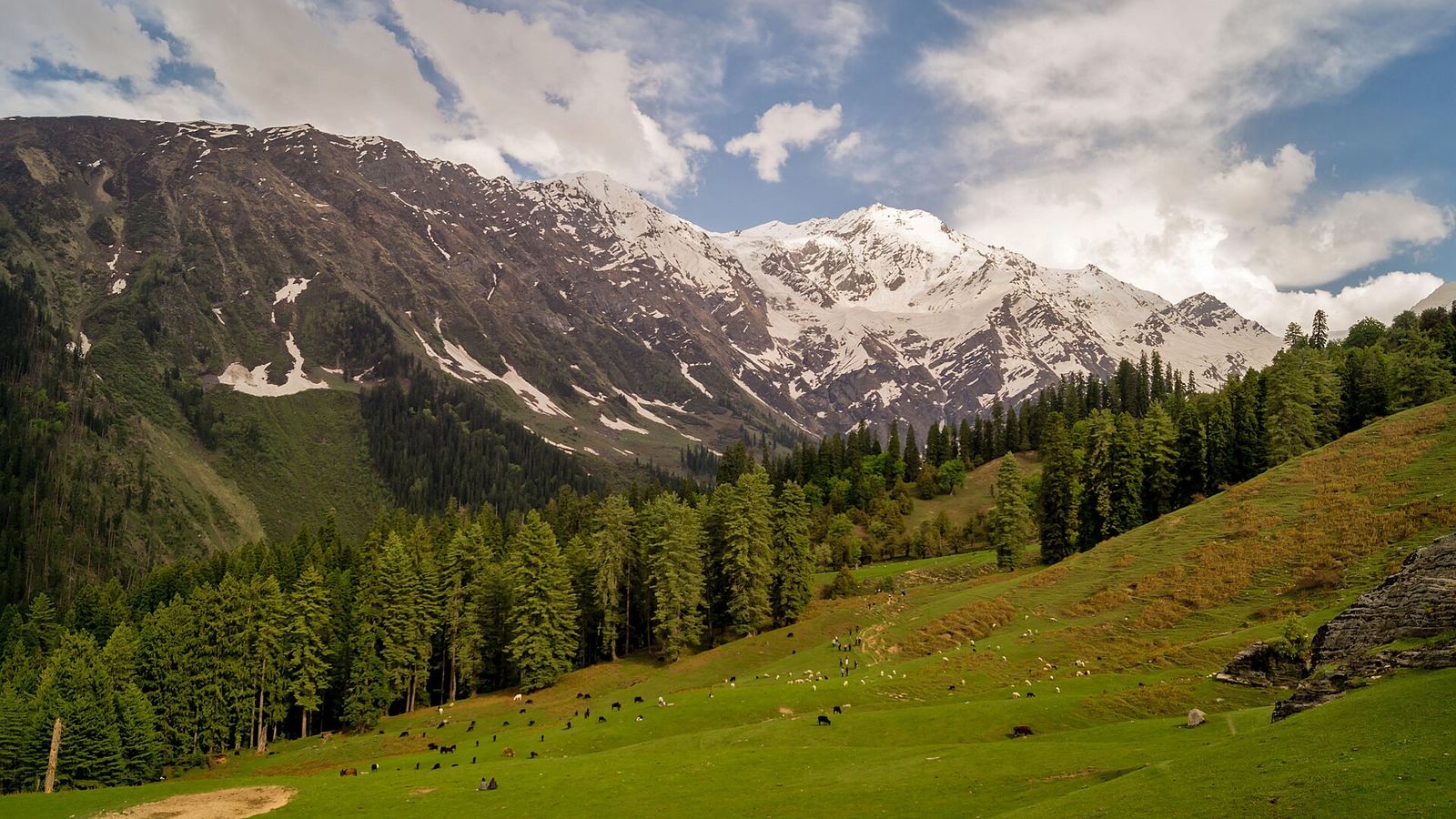
The Narkanda–Jalori route goes higher and east: Narkanda, down to Luhri on the Sutlej, up through Ani, over Jalori Pass at roughly 3,120 m, then down through Shoja and Banjar to rejoin the highway at Aut. It is spectacular, and it lets you break the journey in the Banjar valley rather than grinding through in a single day. It is also narrow, steep between Khanag and the pass, and a poor idea in heavy rain. If you are drawn to it, treat it as a two-day plan and read our Jibhi, Tirthan and Jalori route guide before committing.
For a first trip, in any season, take the Mandi route. Save Jalori for a dedicated Banjar-valley itinerary in autumn.
How long does Shimla to Manali actually take in August?
Longer than the map says. The honest planning number for monsoon is 9–11 hours on the Mandi route, and you should be prepared for more.
Two things drive this. First, single-lane traffic control at landslide clearance points, which can hold a queue for anything from twenty minutes to several hours. Second, the sheer volume of road closures in the districts you are passing through. In the State Emergency Operation Centre report for 3 August 2026, 109 roads were closed statewide, with Mandi at 43 and Kullu at 39 — though no national highway was blocked that evening. Those are mostly village link roads rather than your route, but they tell you how saturated the hillsides are.
The weather picture is similar. The Shimla Meteorological Centre has a yellow rainfall warning running for isolated parts of the state until 9 August, with widespread rain forecast through the 4th–10th. Check the IMD Shimla regional page the night before you travel, and the HPSDMA daily situation report on the morning itself. Both are free, both are official, and between them they will tell you more than any travel forum.
Practical consequence: leave Shimla by 06:00–07:00. A departure after 10:00 in August means the last two hours are in darkness on the stretch you least want to drive in darkness.
Bus, taxi or shared seat — what should you actually book?
HRTC bus. The state corporation runs several daily departures, roughly between 08:00 and 21:40, with ordinary, Himsuta and Volvo classes. Fares start near ₹560 and top out around ₹850 for the Volvo multi-axle, and the scheduled run is about 8–8.5 hours. Book through the official HRTC reservation portal, which allows advance booking, rather than through a reseller. In August, Friday and Saturday Volvo departures and the days around Independence Day fill early.
Private taxi. Approximately ₹3,500–5,500 for a sedan and ₹5,500–7,500 for an SUV one way, with wide variation by season and operator, and tolls and parking typically billed separately. This makes sense for three or four people, for anyone travelling with elderly parents or small children who need real halts, or when your Manali stay is up a lane a bus cannot reach. It also buys you the ability to stop and wait out a clearance rather than sitting in a bus queue.
Shared seat. The gap between a ₹650 bus seat and a ₹5,000 cab is where per-seat travel makes sense on Himachal corridors, and it is the same logic we set out for the Chandigarh to Manali shared cab run. HimSafar's shared routes are being designed around exactly this pattern; the platform is in waitlist mode today, so treat it as something to register interest in rather than book.
Is there a way to skip the drive altogether?
Partly. Bhuntar (Kullu–Manali) Airport sits about 50 km short of Manali, and flying into it removes the worst of the corridor. But Bhuntar is weather-sensitive, monsoon cancellations are common, and there is no direct Shimla–Bhuntar flight — you would be routing through Delhi or Chandigarh, which rarely saves time on a Shimla start. Our Bhuntar Airport to Manali and Kasol transfer guide covers the onward leg if you do fly.
For most travellers starting in Shimla, the road is the only sensible option. The decision is not whether to drive, but when to leave and how much buffer to keep.
Frequently asked questions
Is the Shimla to Manali road open right now? As of early August 2026, the national highway route via Mandi and Kullu was open, with intermittent single-lane restrictions at clearance points. Rural link roads in both districts were widely affected. Conditions change daily — check the HPSDMA situation report before you leave.
How many hours is Shimla to Manali by bus? HRTC schedules run about 8 to 8.5 hours. In monsoon, expect the actual arrival to slip by one to three hours.
Which is better, the Mandi route or Jalori Pass? Mandi, for speed, safety and reliability. Jalori is the better drive but only in clear weather, and it adds roughly two hours plus a real risk of closure in rain.
Can you do Shimla to Manali in one day comfortably? Yes in the dry season, with an early start. In August it is doable but tiring, and a night halt at Mandi or in the Banjar valley makes the trip far more pleasant.
Do you need to book a bus in advance for this route? For Volvo and Himsuta classes, yes — especially on weekends. Ordinary services are usually available at short notice.
The practical recommendation
If you are travelling in the next few weeks, take the Mandi–Kullu highway, leave Shimla before 07:00, and keep your first evening in Manali unplanned. If you are a group of three or four, a private taxi with the option to halt at Mandi is the calmest version of this journey. If you have flexibility, move the trip to late September, when the broader monsoon cautions we set out for Himachal travel start to ease and this drive becomes one of the best in the state.
Once you arrive, give Manali and the Solang side at least three nights. A route this demanding deserves more than a one-night stop.
Why this matters
This guide is part of the demand map we are building for Himachal. If the route, activity or idea matters to you, joining the waitlist tells us to prioritize it.
What to do next
Open the related destination or service, preview the travel flow, and support the specific corridor instead of signing up generically.
Reader signal
Reading about Routes helps us understand content demand. Waitlist joins help us understand launch demand.
Want this to become a real Himsafar route?
We are using the website to learn what people actually want us to build. Join the waitlist to show support for this kind of Himachal travel and get first access when matching routes open.
HimSafar Editorial
Destination guides