Yes. Entry to the Great Himalayan National Park is by permit only, issued at the head office in Shamshi or the range offices at Shairopa (Tirthan Valley) and Ropa (Sainj Valley). Multi-day treks into the core zone additionally require certified guides and porters. The ecozone villages outside the park boundary — Gushaini, Sai Ropa, Shangarh — need no permit at all.
Quick facts
- What it is: the 90,540-hectare Great Himalayan National Park Conservation Area, inscribed on the UNESCO World Heritage List in 2014, with a 26,560-hectare ecozone buffer along its south-western edge
- Where: Kullu district, above the Tirthan, Sainj, Jiwa Nal and Parvati valleys
- Permit issued at: GHNP head office, Shamshi; range office Shairopa (Tirthan); range office Ropa (Sainj)
- Entry fee: commonly quoted at around ₹100 per day for Indian nationals and ₹400 for foreign nationals, plus camera charges — the park's own fees and rules page asks visitors to confirm current rates with park authorities, so treat these as indicative
- Guides: mandatory for multi-day core-zone treks; routes must be approved by a range officer before entry
- Altitude range: 1,700 m to about 5,800 m
- Best window: roughly April–June and September–October; parts are snowbound in winter
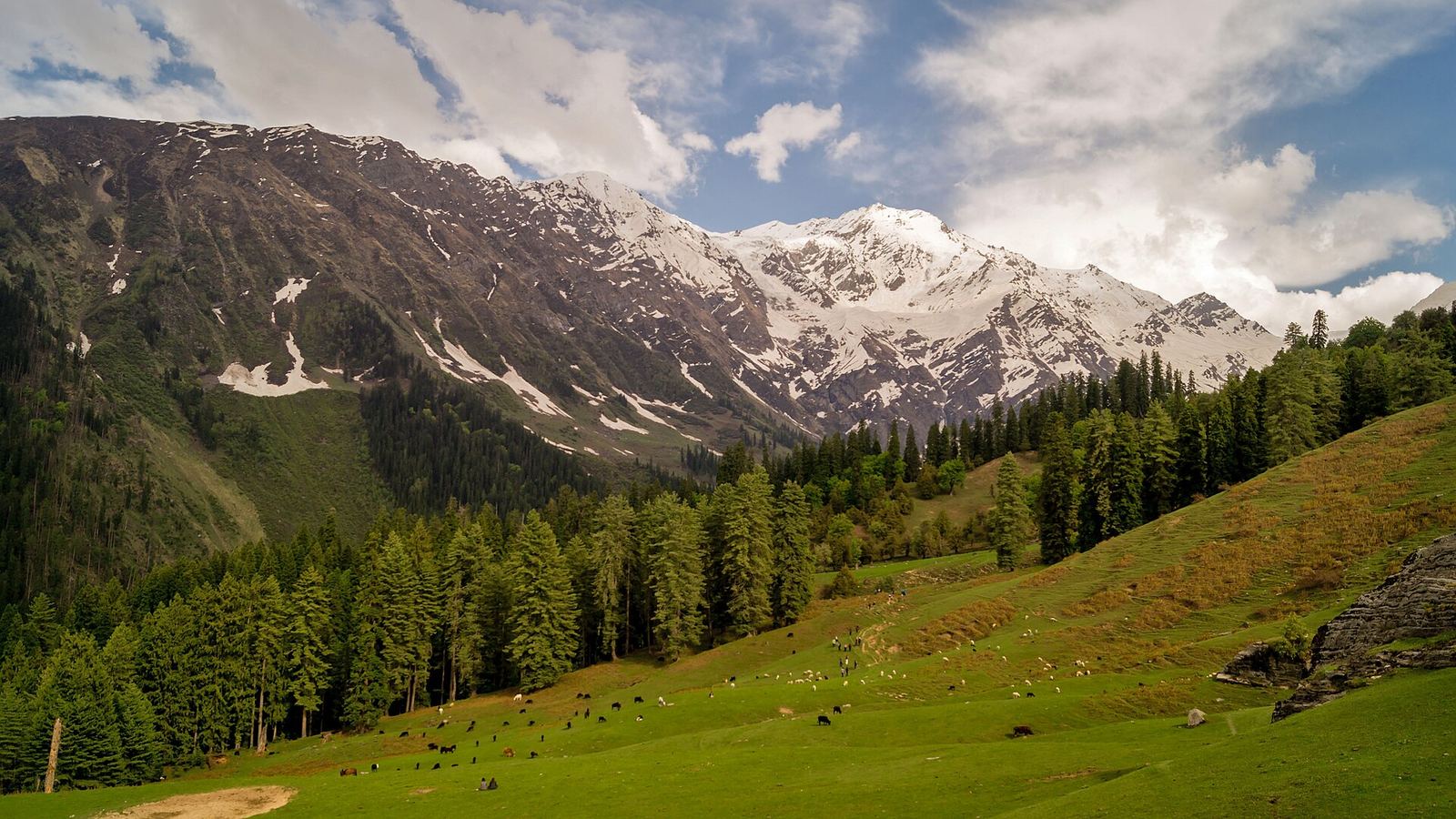
Where do you actually get the Great Himalayan National Park permit?
At a range office, in person, before you walk in — not online, and not at the trailhead.
The park lists three issuing points: the head office at Shamshi near Kullu, the Shairopa range office in Tirthan Valley, and the Ropa range office in Sainj Valley. Most travellers use Shairopa, because it sits on the road a few kilometres before Gushaini and is the natural stop on the way to a Tirthan homestay.
Two things matter more than the fee itself:
Your route needs approval. The park's rules state that trekking routes must be discussed with and approved by a range officer before you enter. Some areas are closed outright on ecological grounds.
Photography is a separate permission. Still and video permits are handled at the check-in facility, and commercial filming needs additional permits and fees. If you are carrying anything that looks professional, declare it.
If your trip is a day walk in the ecozone — the Tirthan riverside trails, Shangarh meadow, the villages around Gushaini — you are outside the park boundary and no permit or guide is required. That distinction is the single most useful thing to understand before planning.
Which entry point should you choose?
Four valleys, four roadheads, all reached from the small highway town of Aut on the Chandigarh–Manali corridor.
Tirthan Valley → Gushaini. The default choice, with the most homestays, food and taxi availability. The park's own access notes put Gushaini roughly 50 km from Aut on an all-weather road; local drivers usually plan 1.5 to 2 hours. Trails from here include the short Morahani ridge walk and the longer Rakhundi Top and Tirath routes.
Sainj Valley → Neuli. About 46 km from Aut. Quieter and less commercial. Ropa village, around 5 km short of Neuli, is where a narrow gravel road climbs to Shangarh meadow — the park describes it as suitable only for four-wheel-drive vehicles, worth repeating to any driver quoting you a fare in a small hatchback.
Jiwa Nal Valley → Siund. Around 35 km from Aut, at the confluence of the Jiwa and Sainj rivers. Least visited of the three.
Parvati Valley → Barshaini or Pulga. Reached via Bhuntar and Manikaran rather than Aut, and the start of the Pin Parvati Pass crossing at 5,319 m — expedition territory, not a first GHNP trip. Our Kasol and Parvati Valley trip guide covers that approach.

How do you reach the park from Delhi, Manali or Dharamshala?
Everything routes through Aut, then across the Beas bridge into the Banjar valley.
| From | Approx. distance | Typical time |
|---|---|---|
| Delhi | ~480 km | 10–12 hours |
| Dharamshala | ~170 km | 6–8 hours |
| Shimla | ~185 km | 6–8 hours |
| Manali | ~70 km | 2–3 hours |
Those figures come from the park's access and travel notes. Add buffer in monsoon.
By air, Bhuntar (Kullu–Manali) is the nearest airport, roughly 50 km away, though the schedule is thin and weather-sensitive — see our Bhuntar Airport transfer guide before you build a plan around a single morning flight.
By road, HRTC buses run Aut–Banjar–Gushaini, but the last legs are infrequent and slow with luggage. For a group with trekking kit, a full cab from Aut or Bhuntar is usually the better call. For an ecozone trip where the car should wait through a walk and a village lunch, an hourly rental with a driver is a cleaner structure than renegotiating a drop fare at every halt. Himsafar's shared route seats are built for exactly this kind of leg, and are currently in waitlist mode rather than live booking.
When is the best time to visit GHNP?
Late September through October, if you want one answer.
The park is open for most of the year but snowbound in parts through winter, and the practical trekking windows are roughly April to June and September to October. Autumn generally gives you drier trails, clearer ridge views and stable river crossings — spring gives you flowers and more snow at height.
Monsoon is the season to be cautious about, and 2026 has been a hard one — through the first week of September, Mandi and Kullu were among the districts with the largest numbers of blocked roads statewide. Check the HP State Disaster Management Authority bulletin and call the range office on +91-1902-265320 before committing to dates. Our monsoon travel guide for Himachal covers how to build buffers into a hill itinerary.
What should you plan for on a multi-day trek?
Treat GHNP as a genuine wilderness trek, not a hill-station walk.
- Fitness: the park describes its multi-day routes as moderate to strenuous, with sustained climbing. Most people in good health manage up to 4,000 m; Pin Parvati is a different category requiring snow-walking and orientation skills.
- Insurance: the park strongly advises travellers staying more than one day to carry cover for emergency medical treatment and evacuation.
- Self-sufficiency: no motorised access inside, limited mobile coverage, and open fires are forbidden. Non-biodegradable litter must be carried out.
- Guides and porters: certified, and arranged through the range office or a registered local operator. This is a rule, not a suggestion.
- Accommodation: forest rest houses at Sai Ropa, Ropa/Sainj and Shangarh, plus homestays through the ecozone villages. Book early in autumn.
Read our safety approach if you are travelling with children or older parents and want to know where the sensible cut-offs sit.
Frequently asked questions
Can you visit GHNP without a permit? Only the ecozone. The villages, riverside trails and meadows outside the park boundary — Gushaini, Sai Ropa, Shangarh — are open without a permit or a guide. Crossing into the park itself requires prior permission.
Is a guide compulsory? For multi-day treks into the core zone, yes — the park requires certified guides and porters. For an ecozone day walk, no, though a local walker is still useful for river crossings and route-finding.
Can you do GHNP as a day trip? Realistically, no. The roadheads are 35–52 km beyond Aut and the walking starts from there. Plan at least two nights in Tirthan or Sainj even for a light itinerary.
Is there a jeep safari inside the park? No. All activity inside the park is on foot; there is no provision for motor safaris.
How does GHNP compare to Tirthan or Jibhi as a destination? They are complementary. Tirthan Valley and Jibhi and Jalori Pass are the comfortable bases; the Great Himalayan National Park is the wilderness you enter from them. Our Jibhi, Tirthan and Jalori route guide explains how to sequence the three.
The practical recommendation
If this is your first visit, base yourself in Tirthan Valley for three nights in late September or October. Collect the permit at Shairopa, do one guided day inside the park boundary and one unhurried ecozone walk, and treat the drive from Aut as a real leg rather than a formality. That plan survives a blocked road, a weather change and a slow permit queue.
Why this matters
This guide is part of the demand map we are building for Himachal. If the route, activity or idea matters to you, joining the waitlist tells us to prioritize it.
What to do next
Open the related destination or service, preview the travel flow, and support the specific corridor instead of signing up generically.
Reader signal
Reading about Great Himalayan National Park helps us understand content demand. Waitlist joins help us understand launch demand.
Want this to become a real Himsafar route?
We are using the website to learn what people actually want us to build. Join the waitlist to show support for this kind of Himachal travel and get first access when matching routes open.
Himsafar Editorial
Destination guides